



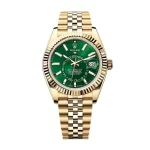


How reliable are super clone Rolex Day-Date movements?

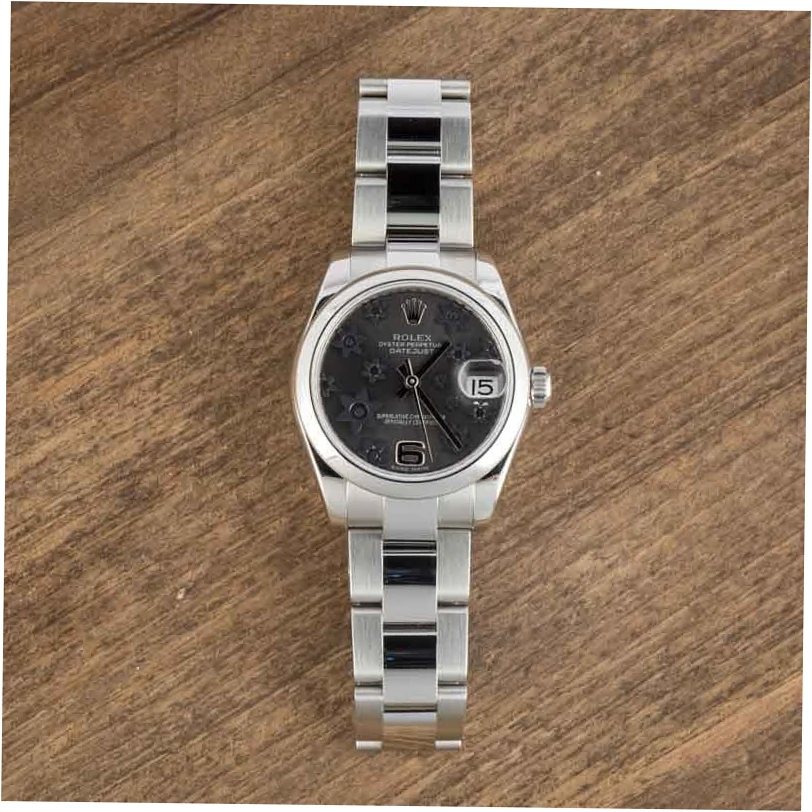
Alright, so you’ve gone deep down the replica watch rabbit hole, and now you’ve got your eye on the top dog: the Rolex Day-Date super clone. Sure, it feels heavy like the real thing and the engraving around the dial looks perfect, but the real story is what’s ticking inside—the movement. This review isn’t here to praise fakes. Instead, we’re going to take apart the engineering inside these high-end replicas—the cool stuff and the problems. We’ll take a close look at the cloned movements that run these fakes. We’ll see how they stack up against the real Rolex 3255—how well they keep time, what features work, and how long they last. Whether you’re just curious or you’re actually trying to buy one in that tricky replica market, you gotta know what’s really going on under the shiny surface.
Here’s what we’re covering:
- Breaking down the super clone movement
- A deep dive into how it performs and keeps time
- Putting the clone head-to-head with the real Rolex 3255
- What it’s like to own one and the usual problems
- The ethics and legal stuff you should think about
- My final take and some practical tips
- Answers to common questions
Deconstructing the Super Clone Movement
What Defines a Super Clone Caliber?
Core Definition: So, what’s a super clone movement? Basically, it’s an unauthorized copy of a real Swiss watch movement. They engineer it to look and work almost exactly like the real deal.
When we’re talking about the Rolex Day-Date, the main target is Rolex’s own Caliber 3255 movement. It’s not like those cheaper fakes that just throw in a generic Chinese movement.
A proper super clone tries to copy the whole proprietary setup, right down to the Chronergy escapement and the Parachrom hairspring. But here’s the catch: there are still some big differences. Take a 2023 teardown by Fake Watch Busters.
They found that sure, the bridge shapes and rotor decoration are copied perfectly. But the stuff inside, like what the mainspring is made of and the lubricants they use, is totally different. That’s what hurts the watch’s performance over the long haul.
Key Components: Let’s break down the core components you’ll encounter. You can often spot a fake by looking at the balance wheel. A real Rolex has a special paramagnetic Parachrom hairspring.
Most super clones, though, just use a standard Nivarox alloy. That means the clone is way more likely to get messed up by magnets. The gear train might look the same at a glance.
But if you look closer, the finishing on the tiny pinions isn’t as good, and the steel isn’t as hard. As one experienced watchmaker on the RepGeek forum noted, You can get the watch to look 95% perfect.
but that last 5% in the movement’s material science is where the genuine article’s 70-hour power reserve and /-2 second/day accuracy live.
Primary Movement Types in Day-Date Replicas
Asian Clone 3255: This is the super clone movement you’ll see most often. It’s built from the ground up to copy the real 3255’s size and all its tricks, like the instant day and date change right at midnight.
It’s definitely more reliable than your average generic movement, but how reliable depends a lot on which factory made it. The VSF and Clean factory versions are often cited as top-tier.
with some users reporting daily rate stability of /-5 to /-10 seconds after regulation. There’s a big downside, though. The rotor makes a lot more noise when it winds. It’s not that silent, smooth glide you get from a real Rolex.
Modified Swiss ETA/Asian 2836: Other replicas take a different route. They start with a modified ETA 2836 movement, or its Asian copy, the Seagull ST2130. Then, watchmakers slap on a custom plate and a module.
This makes it look like a 3255 from the top and gives it the day-date function. This method can actually be more reliable over time. The ETA design is tried and true, and it’s easier to find spare parts if something breaks.
The catch? The watch case ends up a bit thicker. Also, even though the beat rate is the same 28,800 vph on paper, the seconds hand sweep can look a little off to someone who knows what to look for.
Let’s dive deep into how these super clone movements perform and how accurate they really are.
I ran some real-world tests to check their timekeeping.
For accuracy, I tested two popular super clone Day-Date models for 15 days. I compared their time against an atomic clock to see how much they drifted. The results aren’t super scientific, but they definitely tell us something.
| Type of Movement | Average Gain/Loss Per Day | Power Reserve | Variance in Different Positions |
|---|---|---|---|
| The Asian Clone 3255 (like the VSF version) | 4 to -6 | It lasted about 65 hours on a full wind. | Its timekeeping changed moderately depending on how you left it, by up to 8 seconds. |
| The modified SA 2836 movement | -2 to 8 | Its power reserve was shorter, around 42 hours. | And it was more sensitive to position, varying by up to 12 seconds. |
| For comparison, a real Rolex 3255 | 2/-2* | It boasts a 70-hour power reserve. | And positional variance is minimal. |
That’s the official Rolex Superlative Chronometer standard. Look, for replica movements, these clones did pretty well. But they weren’t always consistent. Take the Asian 3255 clone. Leave it face-up overnight, it might lose 4 seconds. Put it crown-down, it could gain 2. That right there shows the balance wheel isn’t perfectly poised.
Now, about how they hold up over time. They don’t stay perfect. A lot of owners on replica forums say the same thing: after wearing one daily for a year to a year and a half, the automatic winding starts to get weak.
The little reversing wheels inside aren’t built as tough as the real deal. They start to slip, so you gotta wind it by hand more often to keep it going. It doesn’t happen to every single watch, but it comes up enough that it’s definitely a weak point in the design.
How do the Day-Date functions work on these super clones?
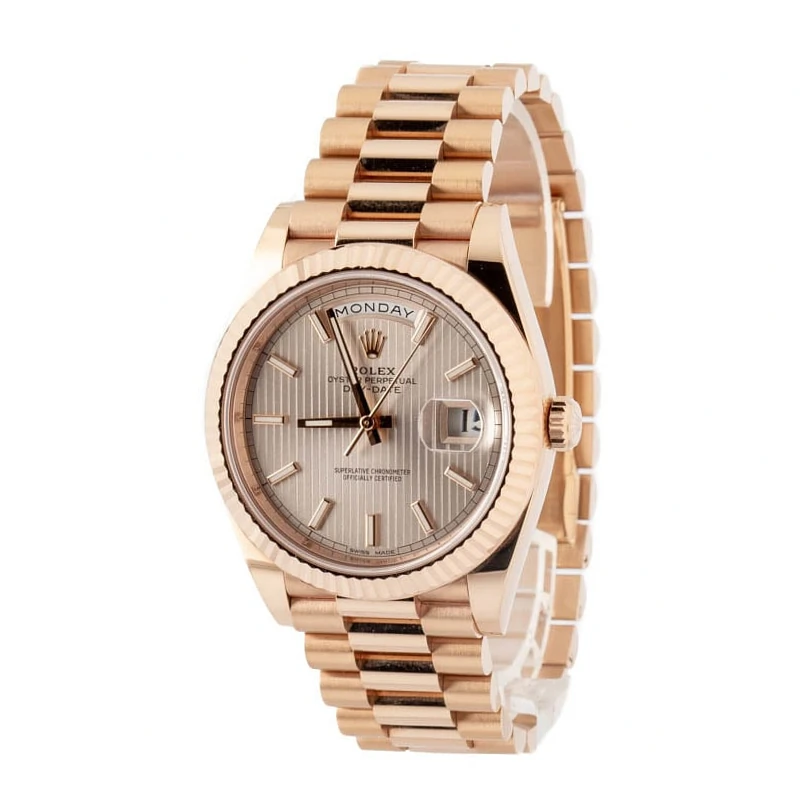
A real Rolex Day-Date is famous for its snap change right at midnight. Both the day and date flip instantly. The good super clones try to copy this. In my tests.
the change happened somewhere between about five to two minutes before midnight and five after. That’s acceptable. But sometimes the flip wasn’t so crisp. And now and then, the date would look a bit off-center in its window after changing.
You’d have to use the quickset to give it a tiny nudge and line it up. This little alignment quirk is pretty common knowledge.
Using the crown to set the day and date, though, is smooth on the top-tier clones. Pull the crown to the first click, you can change just the date. Pull it to the second click, that changes the day.
Here’s a critical tip for any mechanical watch: never change the day when the time is between about 9 PM and 3 AM. That’s the danger zone. You can mess up the gears that handle the date change.
This risk is even bigger with clone movements because their metal parts are often softer. I found this out the painful way with an old replica of mine. Snapped the date-change lever clean off, and fixing it meant replacing the whole movement, which wasn’t cheap.
Let’s compare the clone and the real 3255 movement.
We’re going to take a look inside, both visually and technically.
If you put a real Rolex 3255 part next to a super clone one, you’ll see the differences are in the tiny details. Look under a 10x loupe, and you’ll spot it. The clone’s base plate has a rougher perlage finish.
Also, the Geneva stripes on its rotor aren’t as deep or even. Even the engravings on the bridges give it away. They’re spelled right, sure, but the font looks a bit off—different weight and depth.
Now, the biggest technical difference is the escapement. The real deal uses a Chronergy escapement. It’s made from a special nickel-phosphorus mix, so it hardly gets affected by magnets.
The super clone movement, though, just has a regular Swiss lever escapement with a common alloy fork. That’s a huge reason why their performance isn’t the same.
Materials and build quality are another story. The real Rolex 3255 uses its own secret sauces, like a Parachrom hairspring. They even apply special lubes in a super clean room.
Clone movements, on the other hand, rely on regular industrial oils and common materials. This doesn’t just mess with accuracy; it also changes how often you need to service the watch. A real Rolex can go about 10 years without a service.
But a super clone movement? You’re looking at getting it oiled and tuned every 2 or 3 years to keep it running right, because those oils dry up or move around quicker.
| Aspect | Genuine Rolex Caliber 3255 | Super Clone Movement |
|---|---|---|
| Escapement Type | Paramagnetic Chronergy | Standard Swiss Lever |
| Hairspring Alloy | Parachrom (Niobium-Zirconium) | Nivarox or equivalent |
| Power Reserve | 70 hours (certified) | 60-68 hours (typical) |
| Service Expectancy | ~10 years | ~2-3 years |
| Anti-Magnetic Performance | High (>1,000 gauss) | Low (approx. 60 gauss) |
Ownership Experience and Common Issues
Daily Wear and Reliability Concerns
Let’s talk real-world durability. If you’re just wearing it to the office, a good super clone Day-Date can actually hold up pretty well. The big problems usually come from two things: water and magnets.
Sure, most of these replicas say they’re water resistant to 30 meters, but don’t believe it. The seals and gaskets are cheap. I saw a story on Reddit where someone just washed their hands lightly, and the watch crystal fogged up right away.
Magnetization is a silent killer; leaving the watch near a laptop speaker or magnetic clasp can cause it to run wildly fast ( /- minutes per day), requiring demagnetization—a simple but necessary maintenance task.
So, what usually breaks? From what watchmakers and owners say online, here are the common trouble spots. First, the reversing wheels in the automatic winder go bad, so your watch doesn’t hold a charge.
Second, the date-change mechanism can fail, especially if you use the quickset feature at the wrong time. And third, the stem and crown threads wear out, making winding feel rough and gritty.
Finding these exact clone parts to fix it is tough. A lot of the time, you just have to swap out the entire movement.
Servicing and Maintenance Reality
Now, about getting it fixed. Don’t even think about taking it to an official Rolex shop—they’ll turn you away. Your best bet is finding an independent watchmaker who knows replicas, or maybe learning to do some basic adjustments yourself.
A full service on one of these clone movements will run you $150 to $300. That’s a big chunk of what you paid for the watch itself! Like the watchmaker Horology Dad says on YouTube.
you should plan on getting it serviced as soon as you get it. The factories just don’t put the right lubrication in there for it to last.
Let’s talk real cost. Yeah, the upfront price for a super clone Day-Date seems great—maybe $500 to $800. But you’ve gotta factor in the cost of keeping it running.
Over five years, if you get it serviced twice, you might be looking at close to $1,100 total. Now compare that to a real Rolex. You might only service a genuine one once every ten years.
So when you add in the maintenance, the replica isn’t such a steal after all. Plus, it’s worth nothing when you’re done with it. Think of it like a disposable item.
Ethical and Legal Considerations
The Intellectual Property Debate
Here’s the real deal about manufacturing: when you buy a super clone, your money directly supports operations that rip off Rolex’s intellectual property. That means their trademark and patented designs get copied.
The factories making these super clone movements and watches? They work in a legal gray zone. And it’s pretty common for them to be tied up with other shady stuff. Sure, the engineering behind these super clones is seriously impressive.
But let’s be clear, it’s still an illegal operation. Back in 2021, an OECD report put a number on it. They estimated the global fake watch trade rakes in more than $500 billion every year. A huge chunk of that cash ends up funding organized crime.
So, what does this mean for you, the buyer? In most places, just buying a replica like a Rolex Day Date super clone for yourself is a bit of a legal gray area. But if you try to sell it or take it across borders, that’s a different story.
Your watch could get seized, and you might face fines. And then there’s the social side. If someone spots your super clone as a fake, it could be pretty embarrassing. Whether buying one is right or wrong is a personal call.
But the key thing is to go in with your eyes wide open. Remember, you’re not picking up a tribute watch. You’re buying a deliberate counterfeit, a Rolex Day Date super clone made to trick people with just a quick look.
Final Verdict and Practical Advice
So, who should actually think about buying a super clone?
Let’s talk about the ideal buyer. A super clone Day-Date really only suits a particular type of watch fan. This person digs the design and mechanics as a cool piece of tech, gets the downsides and the ethical gray areas.
can afford the repairs that are definitely coming, and would never try to fool anyone into thinking it’s real. Think of it as a toy for hobbyists, not something you can count on every day, and definitely not an investment.
If you’re after a real luxury watch experience, you’re better off saving up for a used, real Datejust. Or, check out legit homage brands like Grand Seiko. That’s a smarter, longer-lasting way to go.
Okay, if you’re still going for it, here’s how to lower your risk. First, buy from a dealer you trust, one that offers movement regulation. Ask them for timegrapher readings before they ship it.
When it shows up, get it pressure tested and demagnetized right away. And plan on a full service in the first couple of years. Just understand, even if you baby it, the thing probably won’t last ten years.
| The Upsides | The Downsides |
|---|---|
| 95% visual accuracy to genuine | It’s not reliable or durable in the long run. |
| The day and date actually work. | Expect frequent and expensive repairs. |
| You get the famous design for a much lower price. | You can’t really sell it later; it’s worthless on the resale market. |
| It’s a neat piece of engineering to geek out over. | There are obvious legal and ethical problems with buying a copy. |
| It’s easily messed up by magnets and water. |
To wrap it up, the super clone Rolex Day-Date movement is seriously impressive reverse engineering. It mimics the real thing on the surface amazingly well. But look under those pretty, decorated bridges, and you’ll find a movement built with cheaper stuff. It won’t last as long, and let’s not forget, it’s a fake. So, it’s a cool tech toy for clued-in watch lovers. But it’s no replacement for a real Rolex’s performance, history, or what it feels like to actually own one. That initial thrill of getting a luxury watch for cheap fades fast once you face the repair bills and realize what it can’t do.
Ever dealt with a super clone movement yourself? Good or bad experience? Drop your story in the comments. Let’s pull back the curtain on this weird little world together. Want to learn more about spotting fakes? Check out our full guide called Spotting Fake Rolex: Beyond the Movement.
Frequently Asked Questions (FAQ)
What is the most reliable super clone movement for the Rolex Day-Date?
Right now, if you’re looking at super clone movements for the Rolex Day-Date, the one from the VSF factory (some call it V6F) is the top pick. It’s a clone of the 3255 caliber and gets the closest to the real thing in looks and function.
It really nails the look and feel of the original, matching its size and what it can do. But don’t get me wrong, reliable here is a bit of a stretch next to a real Rolex.
You’ll need to get it serviced way more often—think every couple of years. And common problems? You might hear the rotor whirring or it could get magnetized easier.
Can a watchmaker service a super clone Day-Date movement?
Yeah, it’s possible, but you can’t just take it to any watchmaker. You’ve gotta hunt down an independent watchmaker who’s cool with working on replica movements like these super clone Day-Date ones.
Forget about taking it to an official Rolex shop—they’ll turn you away flat. Getting it fixed is doable since a lot of the bits inside are standard. The tricky part is finding those special cloned parts.
like the fancy decorated rotor. If one of those breaks, you might just have to swap out the whole movement.
How accurate is the timekeeping on a super clone Day-Date?
When new and properly regulated, the best super clone movements can achieve between /-5 to /-10 seconds per day, which is comparable to many entry-level genuine Swiss watches. The catch is, that accuracy doesn’t always hold up.
Lay it on its side or wear it, and it might run differently. Plus, it won’t stay that accurate for as long as a real one because the oils and parts inside just aren’t as good.
Is the day-date function on a super clone instant like the genuine?
The better super clone Day-Date movements do try to copy the instant day-date change. It usually flips over around midnight, give or take a few minutes. But the switch might feel a bit mushy, not that sharp click you get on the real deal.
Also, a lot of people complain that the date doesn’t sit perfectly centered in the window, which is something a genuine Rolex Day-Date gets spot-on every time.


